
Understanding green speed:
A science-driven approach
The subject on green speed surfaced during the recent AGM. This article is an extract of General Manager Desmond Chua’s explanation during the AGM, to provide members and readers with a better understanding of the considerations given in course management, and how the Club strives to balance playability, consistency, and long-term turf health. We hope this article offers helpful insight and golfers can better appreciate the next time they step onto the green.
The conversation around green speed is often heard among golfers. While the desire for consistently fast greens is understandable, it is important to recognise that managing green speed is a science—not simply a matter of preference.
Grass type and usage considerations
The greens at Keppel Club’s Sime course are planted with Zoysia Trinity, chosen for its resilience under high foot traffic. This is particularly crucial given that Keppel Club adopts a hybrid model serving both its members and public golfers.
Alternative grasses such as Platinum Paspalum and TifEagle offer faster green speeds but lower durability. Several clubs in the eastern part of Singapore use Platinum Paspalum for its salt tolerance, as they rely on recycled sewage water for irrigation. TifEagle delivers faster greens (up to 10 during tournaments) but cannot withstand high traffic without increasing maintenance budgets. To support TifEagle greens, some clubs install specialised sub-air systems beneath the turf to help maintain optimal conditions, especially during wet or challenging seasons.

Maintenance strategy
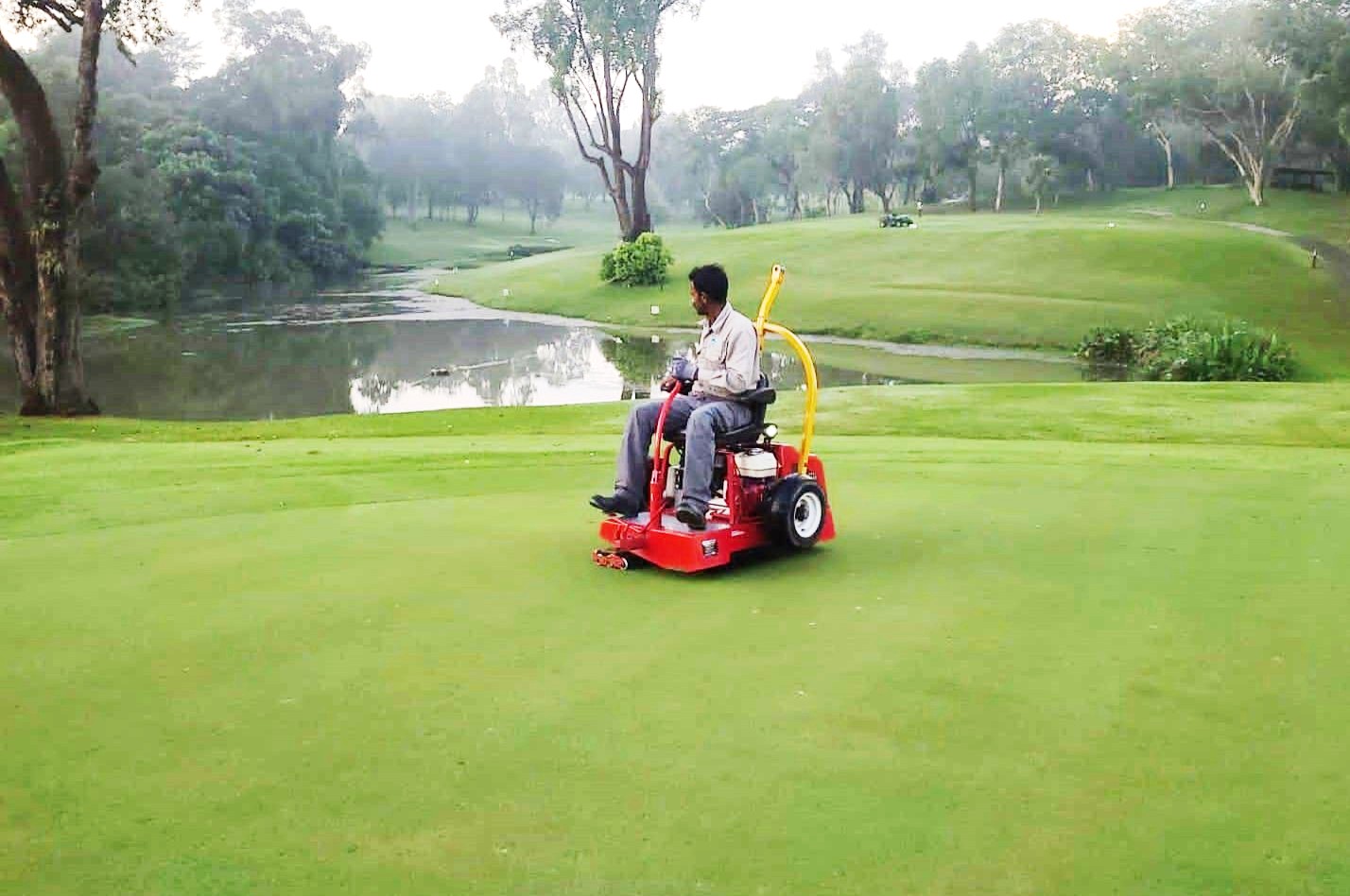
Sime course is about three years old. The roots of the greens are still developing. Each of our 18 greens develops at its own pace—some faster and stronger, others slower. A significant setback occurred in 2024 with a nematode infestation, which affected root development. We managed to cure the greens within eight months, but this process further delayed the development of the turfgrass roots. Healthy root mass and depth are essential, as a strong root system is fundamental for turf growth and resilience. It enables the turf to better withstand the stress from frequent mowing and rolling required to achieve faster green speeds.
Our top priority is turf health and overall playability for the majority of golfers. We are committed to avoiding overstressing the greens which could lead to the use of temporary greens—something we aim to prevent. This commitment shapes our maintenance strategy.
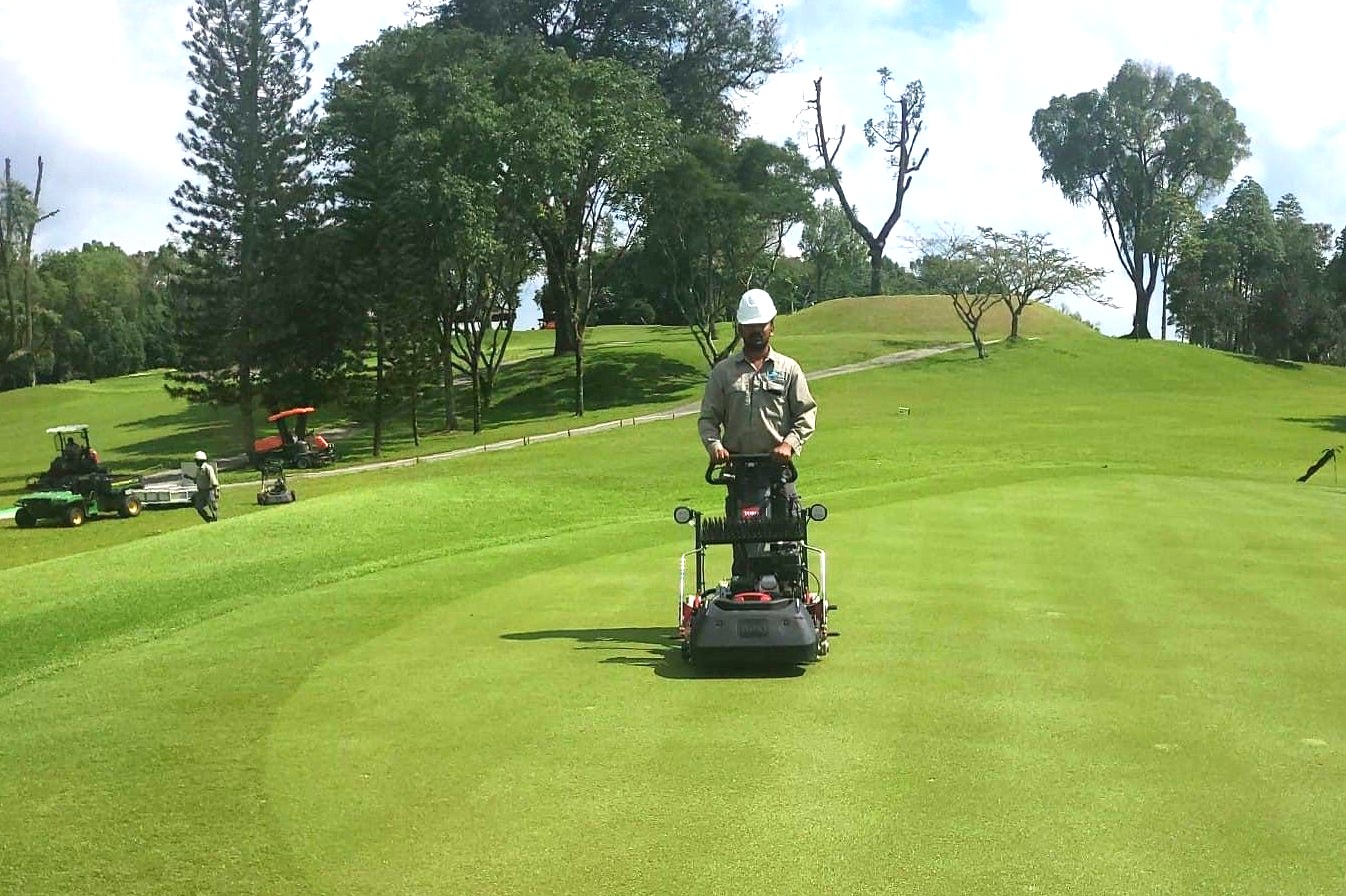
Green speed follows a consistent weekly pattern. Mondays are reserved for rest and recovery, with no mowing—only treatments are applied. At the current stage of turf development, mowing begins on Tuesdays, resulting in speeds of approximately 8.2 to 8.3. Speeds gradually increase through the week, reaching around 8.6 to 8.8 by the weekend, and can exceed 9 during major tournaments.
Once the turf reaches full maturity, daily mowing will help sustain higher speeds. However, aggressive cutting and rolling can place significant stress on the turf, which we carefully manage to maintain long-term health.

Managing expectations
Green speeds of 10 to 10.5 and above are typical for major events such as LIV Golf and the HSBC Open. While such speeds are achievable for short durations, they come at a cost—post-event recovery can take months and significantly affect play. Maintaining tournament-level speeds on a daily basis is not sustainable and would compromise the long-term health of the turf.

Looking ahead
Green speed is not just about cutting grass lower or rolling more often. It involves understanding grass species, traffic resilience, root health, and long-term sustainability. Beyond speed, the trueness of the green surface and the quality of the roll are equally important for a golfer’s putting experience. As our greens are undulating, it can be very misleading when you focus solely on green speed. Combined with surface trueness and having a good read of the line contribute to a perfect putt.
With informed practices and member support, Keppel Club is on a steady path to achieving both performance and consistency on our greens.